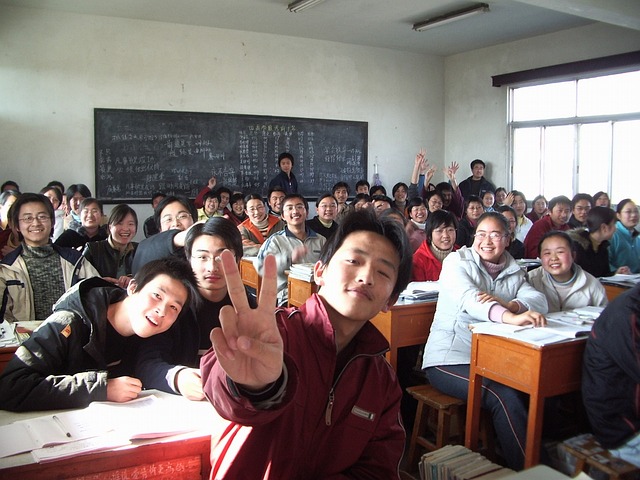
初中英語課堂用語?在英語課堂上,教師們通常會(huì)使用一系列指令用語來組織教學(xué)活動(dòng),引導(dǎo)學(xué)生參與互動(dòng)。例如,當(dāng)學(xué)生進(jìn)入教室時(shí),教師可能會(huì)說:“Hello! Boys and girls. Hello! Miss Wang. Sit down, please.”這不僅表達(dá)了問候,還明確了學(xué)生和教師之間的關(guān)系,并請求學(xué)生坐下,以便開始上課。課堂開始后,那么,初中英語課堂用語?一起來了解一下吧。
個(gè)人覺得校園里最為基本的一些詞匯/術(shù)語也是你要掌握的重點(diǎn),這樣才不至于在你所置身的學(xué)習(xí)環(huán)境里聽到陌生的詞匯而沒有反應(yīng).希望對你有所幫助!
術(shù)語(教學(xué)用語 )
A
A.A
applied anthropology 應(yīng)用人類學(xué)。
A.B.M.
agrucultural business management農(nóng)業(yè)企業(yè)管理
A.C.
accounting and control會(huì)計(jì)與控制/analytical chemistry/
分析化學(xué)
A.C.M
cellular mechamisms of aging 細(xì)胞衰老機(jī)理.
Academic year:
組成學(xué)年的單位,如:學(xué)期、學(xué)季等。
Academic advisor:
由學(xué)校中之教授或職員擔(dān)任, 幫助學(xué)生學(xué)業(yè)問題之顧問。
Accreditation:
資格認(rèn)可。申請學(xué)校時(shí)應(yīng)特別注意所申請的學(xué)校是否被有關(guān)機(jī)關(guān)認(rèn)可。
Admission:
入學(xué)許可。
Advanced placement:
申請美國大學(xué)時(shí),可經(jīng)由考試或轉(zhuǎn)學(xué)分(transfer credit)而直接進(jìn)
入大一、 大二、大三或大四。
Advanced standing:
同Advanced placement。
Associate degree:
副學(xué)士學(xué)位。
Any more?
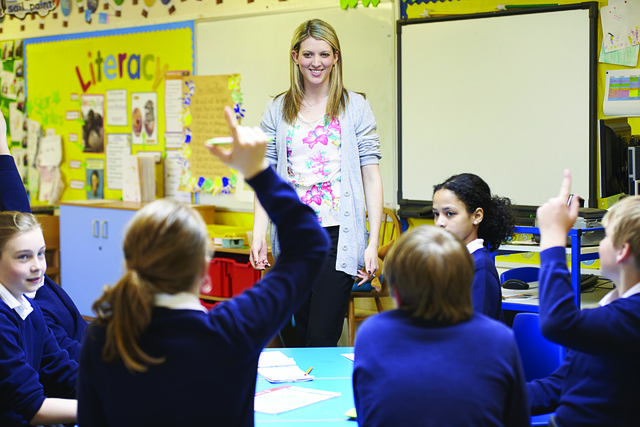
Put up your hands.
You,please.
Stand up,please.
Sit down,please.
Give me your answer.
Very good.
Boys and girls...
Let's read the words together.
Quickly and loudly.
1.cood morning boys and girls.
2.open your book to page xx.
3.show your hands please.
4.follow me/read after me.
5.spell ( teacher t-e-a-c-h-e-r teacher)
6.check your answer.
7.Do you have any questions?
8.show me your homework/picture.
9.let me see your exercise books now
10.speak louder and repeat.
11.look at the blackboard.
12.I say words,and you spell it.
13.look at me do action,and you guess it.
14.together.
15.triangle"one two begin".
Assessment:
very good!Ecactly,completely correct;you're right;good answer;wonderful;excellent.
sorry,i don't think you're right.
I don't think so.

實(shí)用課堂教學(xué)用語 - -
實(shí)用課堂教學(xué)用語
1.上課
Class begin./ It’s time for class.
Let’s have / start the lesson.
Let’s begin our lesson.
2.起立 Stand up.
3.同學(xué)們好 Good morning./ afternoon, everyone/ everybody/ boys and girls.
4.請坐 Sit down, please.Please be seated.
5.今天誰值日?Who is on duty today?
6.大家都來了嗎?Is anyone absent?
7.出席多少人?How many students are present?
8.班級共有多少人?How many students are there in your class?
9.誰沒來?
Who is not here?
Who isn’t at school today?
Who doesn’t come to school today?
10.你知道他為什么沒來嗎?What’s the matter with him? Do you know?
11.今天幾月幾日?What’s the date today?
12.今天星期幾?What day is it today?
13.今天天氣怎么樣?What’s the weather like today? / How is the weather?
14.今天很冷是吧? It’s very cold, isn’t it? / It’s a cold day, isn’t it?
15.李雷,去看看是誰?Go and see, Li Lei.
16.請進(jìn) Come in, please.
17.請回,下次早點(diǎn)來
Go to your seat, please. But don’t be late next time.
Go and sit down. Come earlier next time.
18.坐好了,請脫帽 Sit straight, please. Take off your cap, please.
19.講講你星期天都做了些什么事好嗎?
What did you do last Sunday? Can you tell us?
Would you please tell us what you did last Sunday?
20.那么,你能給我們講一個(gè)故事嗎?Well, could you tell us a story?
21.誰愿意到這兒來給大家講一個(gè)故事?Who’d like to tell us a story here?
22.到誰的了?Whose turn ( is it )?
23.小張,到你的了,到這來給大家講個(gè)故事
Xiao Zhang, it’s your turn. Come here and tell us a story.
24.大家注意聽,然后就他講的故事進(jìn)行問答.
Listen to him carefully, then ask and answer about the story.
25.就你所喜歡的話題進(jìn)行對話.
Make a dialogue in pairs about any topics you like.
26.好了,該學(xué)第八課了.Well, it’s time to learn Lesson 8.
Well, let’s learn the 8th lesson.
27.今天這節(jié)課,我們學(xué)習(xí)新課,第八課.
Today in this class we’ll learn a new lesson, Lesson 8.
28.學(xué)習(xí)新課前,我們復(fù)習(xí)一下第七課的生詞和短語.
Before the new lesson Let’s revise / go over the new words and phrases in Lesson 7.
29.拿出練習(xí)本來,我們來聽寫.
Take out your exercise books. Let’s have a dictation.
30.我叫兩個(gè)學(xué)生到黑板上來寫.
I ask two students to write on the blackboard.
31.誰愿來寫?Any volunteers?
Who would like to do it here?
Who would like to come here and write on the blackboard?
32.準(zhǔn)備好了嗎?開始! Are you ready? (Let’s ) Begin.
33.就聽寫到這,把你們寫的交上來.
So much for the dictation. Please hand them in.
34.現(xiàn)在看圖,兩人一組進(jìn)行問答.
Now look at the pictures, then ask and answer in pairs.
35.談?wù)撨@幅圖,可多可少.
Talk about the picture. You can say more or less.
Say something about the picture more or less.
36.表演第七課的對話.Act out the dialogue in Lesson 7.
37.看教學(xué)掛圖,回答我的問題.
Look at the wall charts and answer my/ the questions.
38.在圖上你能看到什么?What can you see in the picture?
39.還有嗎?還有什么嗎?Anything else / more?Any other things?
40.看圖一,猜一猜發(fā)生了什么事?
Look at Picture 1, and guess what ( has ) happened?
實(shí)用課堂教學(xué)用語(二)- -
1.誰能回答這個(gè)問題?
Who would like to answer this question?
Who can answer it?
2.會(huì)的舉手!Hands up if you can.
Put up/ Raise your hands if you know the answer.
3.好,你來答.OK, you please.
4.下一個(gè),你請來(答,做) Next / The next one, you please.
5.小李,你能回答這個(gè)問題嗎?Can you (answer this one), Xiao Li?
6.小林,你呢?(你能回答嗎?) What /How about you, Xiao Lin?
7.你來回答這個(gè)題好嗎?Would you like to / please answer this one?
8.試一試,錯(cuò)了沒關(guān)系.
Just have a try. It doesn’t matter if you make any mistake.
9.是否正確?( Is he / that / it )Right or wrong?Yes or no?
10.正確/ 錯(cuò)誤 Right./ Yes./ Wrong. / No.
11.正確嗎?( Is it / that / he) Right?
12.是的,正確.Yes, ( it / he) is right.
13.不,不正確.No, ( it / he) is wrong.
14.誰來再做一次?Who would like/ wants to do it again?
15.
16.誰能用另一種方式來做?Who can do/ say it in a different other way?
17.誰有不同觀點(diǎn)/ 看法? Who has a different idea/ opinion?
18.你是什么觀點(diǎn)?/ 你的看法如何?What’s your opinion?
19.沒聽清,請你再說一遍.( I beg your ) pardon?
I didn’t hear clearly. Please say it again/ repeat it.
20.請大聲點(diǎn).( A little ) Louder, please.
21.稍慢點(diǎn)讀.Read ( a bit ) slower.
22.肅靜,你們最好不要在課堂上說話.
Be quiet./ Keep silent. You’d better not talk in class.
23.管好自已的事/ 別管閑事.Mind your own business.
24.不要朝窗外看.Don’t look out of the window.
25.下面學(xué)習(xí)生詞.Now word study.
26.注意發(fā)音.Pay attention to your pronunciation.
27.注意聽我說,并觀察我的動(dòng)作,然后猜詞意.
Listen to me carefully and watch my actions, then guess the meaning of the word.
28.你們聽明白/ 懂了嗎? Are you clear?
Do you catch my idea?
29.這個(gè)詞是什么意思?What’s the meaning of the word?
30.漢語意思是什么?The Chinese ( meaning).
Give the Chinese for it.
31.好了,我們學(xué)習(xí)第二部分對話.
Well, let’s come to Part II, the dialogue.
Well, let’s come to the dialogue in Part II.
32.下面聽錄音,聽前快速看一下黑板上的問題.
Now listen to the tape. Before listening, read through the questions on the blackboard.
33.聽音時(shí)合上書.Close/ Shut your books while listening.
Books closed. / shut while listening to the tape.
Listen to the tape with your books closed/ shut.
Listen to the tape without your books.
34.回答黑板上的問題.Answer the questions on the blackboard.
35.我們來核對答案.Let’s check the answers.
36.一題,哪個(gè)正確?No. 1, which one is right?
37.下一個(gè),哪個(gè)正確?Next, which is the right answer?
38.最后一題最難,正確答案是C,選對的舉手.
The last( one ) is the most difficult/ hardest. The right answer is C. Put up your hands if you choose right.
39.再聽一遍,并跟著讀.Listen to the tape again and read after it.
Now, once again/ more /over, read after it this time.
40.注意語調(diào).Pay attention to your intonation.
英語課堂用語大全(三)- -
1.好啦,就聽到這.OK, stop here.
2.打開書,兩人一組讀對話.Open your books and read the dialogue in pairs.
3.口答練習(xí)冊上的習(xí)題一. Do Exercise One in the workbook orally.
Now, workbook, Exercise 1, do it orally.
Answer the questions of Exercise 1 in your workbooks orally.
4.誰能幫他指出來?
Who can point it out?/ Who can correct the mistakes for him?
5.注意,不要再犯同樣的錯(cuò)誤.Be careful./ Take care. Don’t make the same mistake again.
6.好了,接著來.Well, let’s go on ( with it )
7.接下去做習(xí)題.Let’s go on to do the exercises.
8.看動(dòng)作猜猜他們在干什么?Look at them/ their actions and guess what they are doing.
9.下面進(jìn)行書面作業(yè)?Now written work.
10.用下列詞語寫一篇150字的短文,十分鐘完成.
Write a 150-word passage with / using the following expressions in ten minutes.
11.寫一段對話盡可能使用列詞語.Make a dialogue using the following expressions as much as you can/ possible.
12.寫完了嗎?Have you finished it/ the writing? Finish up?
13.我找兩名同學(xué),把你們寫的對話讀出來.
I ask 2 students to read out their dialogues.
14.下面學(xué)習(xí)課文.Now we study / learn the text.
15.你知道某人或某事嗎?/ 你聽說過…嗎?你能談一談他的情況?
Do you know sb./ sth?Have you heard of sb./ sth?
16.今天,我們學(xué)習(xí)一篇關(guān)于…的文章.
Today we’ll learn a passage/ an article about sb./sth.
17.首先,我給大家介紹課文大意.
First I tell you the main/ general idea about it.
18.快速讀課文,并找到這個(gè)問題的答案.
OK. Now read the text quickly and find out the answer to this question.
19.誰找到答案了?Who find/ know the answer?
20.再細(xì)讀一遍課文,然后回答練習(xí)冊24頁上的問題.
Read it in detail/ more carefully for the second time, then answer theanswer questions on Page 24 of your workbooks.
21.找出疑難點(diǎn).Find out the difficulties and what you don’t understand.
22.誰能幫他解答這個(gè)問題?
Who can help him with the question?
Who can help him out?
23.你最好用英語說.
You’d better say it in English.
24.如果你用英語說有困難,可以用漢語.
You may say it in Chinese if you have difficulty in speaking English / can’t speak it in English.
25.好,我告訴你們這兩個(gè)句子的區(qū)別.
OK. I tell you the differences between the two sentences.
26.這兩個(gè)詞有什么不同?What’s the difference between the two words?
27.請舉例說明.( Give us ) An example, please.
這個(gè)詞可以這樣用.We can use it (in) this way / like this.
英語課堂用語(四)- -
英語課堂用語
作者:曾春健轉(zhuǎn)貼自:本站原創(chuàng)點(diǎn)擊數(shù):3356
課堂常規(guī)用語
一、 打招呼(Greetings)
Good morning, class.
Good afternoon, class 4.
Good morning, everybody.
Good afternoon, everyone.
Good morning, boys and girls.
Good afternoon, children.
How are you all today?
Are you all well this morning?
打招呼之后,可以增加一兩句(Beginning a chat)
Well, did you have a good weekend?
Well, did you enjoy the holiday?
Well, what did you do yesterday evening?
Tell me what you did at the weekend?
談?wù)剬W(xué)生衣著發(fā)型也可以:
Oh, you\'ve got a new dress on. It\'s very nice.
Oh, you\'ve got a new hair style.
二、考勤(Checking attendance)
1.點(diǎn)名
Right ! I\'m going to call the row.
OK ! Listen while I call your names.
Now ! I\'ll take the register.
Quiet f now, please. Listen while I see if you\'re all here.
2.問缺席情況
Now ! Let\'s see who\'s absent.
Right ! Let\'s see if anyone\'s away.
Is anybody absent?
Is everybody here?
3. 關(guān)照新生
Oh, are you new?
OK, are you a pupil?
You have just come to this class (school), haven\'t you?
Where do you come from?
What\'s your name?
Do you like the school?
Welcome to our class.
4. 談缺勤原因
Where\'s Wang Hai?
Does anyone know where Li is?
Can anyone tell me where Liu has gone?
Who knows when he will be back?
Han Meimei is ill today, isn\'t she?
5. 關(guān)照病愈者
You were absent for three lessons last week.
Did you catch a cold?
Oh, I\'m sorry.
You\'ll catch up l won\'t you?
Don\'t worry.
You\'ve been absent for days, haven\'t you?
You were away last lesson, weren\'t you?
\' What was the matter?
Why were you away?
Are you better?
How are you feeling now?
Do you feel better?
Well, Jane, ask your friends to help you.
OK, you\'d better ask your neighbour to tell you what we\'ve done.
Come and see me after the lesson, OK?
三.介紹
Now, let me introduce myself.
I\'ll just tell you a bit about myself.
My name is..., spelt...
I\'ve been teaching in the school for 1O years.
I come from Shanghai.
I worked for a newspaper until last year.
And what about you?
Will you introduce yourselves?
四.開始談話
T: I went to the Summer Palace (引出話題)
Yesterday. Did any of you go?
No?... Well, (無人回答,問某一學(xué)生)
What did you do, -.. er... Zhang Hong.
Zhang:... er... I-. - er. -. in home. (學(xué)生響應(yīng)斷斷續(xù)續(xù))
T: Oh, you stayed at home. (“搭救“說話的學(xué)生 )
Zhang: Yes, I stay at home.
T: OK, you stayed at home. (暗中糾正時(shí)態(tài))
What did you do then?
Zhang:... TV...
T: Oh, you watched television 9 didn\'t you? Which programme?
(繼續(xù)問下去困難,可就此打住 )
有關(guān)用語還有:
Tell me what you did 1ast night.
Will you te11 me a bit about your weekend?
Could you tell us more about the programme?
How did you like yesterday\'s party?
五.建議 (Suggesting)
Let\'s go through the text.
Could you open your textbook and find Ex. 5 on page 45?
Could you take out the cards?
Will you all think of some questions to ask each other?
Will you get together in groups and discuss the idea?
Try to think it out for yourself.
Let\'s work out how you could plan your piece of writing.
Now you\'ve answered all the questions in full. You need to say a bit
more about that.
You\'d better get that right.
六.提起注意 (Directing students\' attention)
Quiet, now, please. Let\'s work in pairs.
Will you face the people in front of you?
Fine. Look again carefully.
Are you ready to listen?
Are you all listening? OK, then.
Now then something new! Let\'s change the topic.
That was quite good, let\'s do it once more.
七.請求(Making polite requests)
Could you possibly plug the cassette player in for me?
Can you check thetch is on?
Will you go and fetch some chalk?
Will you find the wall charts?
Has anybody seen the stick/tape/drawing pins?
Please could you put it up here?
Please would you mind cleaning the board?
八.指導(dǎo) (Giving instructions)
1. 糾正語音
You\'d better listen again.
Will you listen carefully?
Now listen to the sound [a:].Not [a ], like this - you try.
Don\'t forget it\'s [[] not [a ] in and.
Now listen. There\'s something different, What\'s different? Listen.
2. 啟發(fā)思路
Suppose a friend needs advice on the subject-
You could agree with the other person and say something else.
You may ask the reason.
Shal1 1 demonstrate? Keep to the same pattern, ~ OK?
What do you think the author will say next?
I\'ll give you a cue. It\'s something to do with -.
Let me give you some help. When did the man use the word?
3. 介紹方法
You\'d better put them together-
Ask each other questions to find out what is different.
Look at the sentence before and see if you can guess.
You sort out these sentences, then copy them, taking care with
capital letters.
You fill the blanks in these sentences, then write them neatly.
4. 示范動(dòng)作
Look at what I\'m doing.
You may do as I do.
Please look at my mouth, like this -.
九 宣告 (Announcements)
1.宣布教學(xué)計(jì)劃
Today we\'re going to do three main things.
First l I\'m going to introduce a few new words about weather. Then
you\'re going to write a dialogue and act it out. After that, we are
going to learn a new song.
2. 宣布某些事項(xiàng)
I have something to tell you before you go.
There\'s a club meeting on Saturday. If you want to attend it, please
write your name on thispiece of paper.
3. 宣布教學(xué)項(xiàng)目
Well, now, we\'re going to practise a short dialogue.
l want to introduce to you a new programme now.
十.解釋 (Explaining)
Listen to me and I\'ll explain the meaning of the word.
Let me use the picture to show its meaning.
The word ends in \'tion\' so it must be a noun-
Let\'s see if you can guess. I\'ll give you an example: -.
We can use this sentence to express -.
What does it mean in the context? It\'s clear that the man used it to
blame the boy.
Look at the picture here- The man is standing by the window. Perhaps
he is interested in
What is happening in the street.
What might happen in a few minutes? The boy is getting angry with
Mary.
There are three people sitting by the river. They are looking at the
ship. The ship is very beautiful.
十一.禁止 (Forbidding)
T: OK t everybody. Quiet now please! No more talking.
Wang Hai, stop chatting now. And you, Li Guang! Whose turn is it?
S: It\'s my turn. (教學(xué)繼續(xù)進(jìn)行......)
No talking!
No chatting
Stop making a noise.
Without disturbing the others.
No more shouting !
客氣一些:
Please will you stop interrupting the others J
Would you mind not whispering?
嚴(yán)重一些:
There\'ll be trouble if you go on disturbing the others\'
I\'ll report you to Miss Zhou if you go on being silly !
更嚴(yán)重些:
You shouldn\'t be have (be behaving) like that!
Why are you passing notes?
You can\'t copy ! Do it on your own !
No dreaming1 Wake up! -
Stop turning round !
訓(xùn)練中禁止
No writing while I\'m talking.
Don\'t move your lips while (you\'re) reading.
No, Wang Hai, that\'s not the way to learn English properly\'
No, Han Meimei, it\'s not good to do pair practice like that-
You\'re doing it the wrong way.
十二.指命 (Issuing a command)
By yourself. This is practice for the exam.
Books closed.
Back into groups, each person can say it in turn.
You work in twos with two pictures.
Silence.
Quiet please.
Stop now.
Watch how I write it.
Watch how to do it.
Now, turn round, face the back ) without looking at the board.
十三.警告(Warning)
Careful. This is a hard sentence-
Don\'t forget to write neatly.
Make sure your spaces between words are clear.
See that your \'U\'s are different from your \'v\' s.
Copy them taking care with spelling.
Watch your punctuation.
十四、評價(jià) (Evaluating)
Wonderful !
Good !
Very good J
That was good.
Not bad-
Well done.
That was a little better, but...
That\'s much better, but you forgot something when you pronounced
Don\'t you think you have made a little progress?
Nearly right, but you\'d better...
That was not quite right, you didn\'t...
That doesn\'t sound very good.
Not really ! /Not quite! /Watch me and I\'ll show you.
教學(xué)過程用語
作者:佚 名
課堂過程用語
一、 開始課堂教學(xué)(Beginning the lesson)
Now, who can remember what we did last lesson?
Well, can any of you tell me what we practised last time?
OK, l want a student to tell us what we learned/read about/used last
lesson.
Remember?
Do you remember these pictures?
We used the pictures and the cards, didn\'t we?
We practised a talk about sports, right?
Let\'s go over it again.
Let\'s read the sentences once more.
What about having another practice?
How about revising them once more?
二、宣布教學(xué)計(jì)劃 (Announcing the teaching pIan)
first/first of all/and then/later (on)/after that/finally/by the end
of-. - etc.
one. ... /two... /three... /four..\'
Practise a dialogue
Learn something now
Do some read ing / w rit ing / note tak ing
Have some conversation practice
Do some role play
in a few minutes/half way through the lesson/when we\'ve finished...
/near the end of the lesson/at the end of the lesson
if we have enough time/if time permits/if there\'s time/perhaps we
may spend a few minutes on...
By the end of the lesson you\'ll be able to talk about agreements and
disagreements.
You\'ll have learnt how to give people advice.
You\'ll have had practice in writing a letter asking for help.
You\'ll be able to use the present perfect tense for checking up.
三、組織課堂教學(xué)(Getting organized)
Would you move your chairs in (up, back, etc. ) ?
Could you three move your desks forward l please?
Will you both move your table this way please?
Would you mind straightening the chairs please?
Do you mind moving back a bit?Will you make a bigger space here?
Could you possibly arrange yourselves to make a group of 3 (4 , 6,
8, etc. ) ?
If you could arrange yourselves to form a group of 5. -.
Please would you arrange your chairs in 3 (4, 5 t etc- )?
Would you find the handouts we were using last week please?
Could you get out the polycopies you had last time please?
Will you take out the worksheets you began yesterday please?
Let\'s find the passage we were reading last lesson.
Put your other books away, please.
No others! That\'s all.
We don\'t need these pictures. Will you put them away?
Not that book. The other one. Yes, the red one.
Ready ! Now we can start.
Haven\'t you
英語課堂用語(較全)
課堂常規(guī)用語
一、打招呼(Greetings)
Good morning, class.
Good afternoon, class 4.
Good morning, everybody.
Good afternoon, everyone.
Good morning, boys and girls.
Good afternoon, children.
How are you all today?
Are you all well this morning?
打招呼之后,可以增加一兩句(Beginning a chat)
Well, did you have a good weekend?
Well, did you enjoy the holiday?
Well, what did you do yesterday evening?
Tell me what you did at the weekend?
談?wù)剬W(xué)生衣著發(fā)型也可以:
Oh, you\'ve got a new dress on. It\'s very nice.
Oh, you\'ve got a new hair style.
二、考勤(Checking attendance)
1.點(diǎn)名
Right ! I\'m going to call the row.
OK ! Listen while I call your names.
Now ! I\'ll take the register.
Quiet f now, please. Listen while I see if you\'re all here.
2.問缺席情況
Now ! Let\'s see who\'s absent.
Right ! Let\'s see if anyone\'s away.
Is anybody absent?
Is everybody here?
3. 關(guān)照新生
Oh, are you new?
OK, are you a pupil?
You have just come to this class (school), haven\'t you?
Where do you come from?
What\'s your name?
Do you like the school?
Welcome to our class.
4. 談缺勤原因
Where\'s Wang Hai?
Does anyone know where Li is?
Can anyone tell me where Liu has gone?
Who knows when he will be back?
Han Meimei is ill today, isn\'t she?
5. 關(guān)照病愈者
You were absent for three lessons last week.
Did you catch a cold?
Oh, I\'m sorry.
You\'ll catch up l won\'t you?
Don\'t worry.
You\'ve been absent for days, haven\'t you?
You were away last lesson, weren\'t you?
\' What was the matter?
Why were you away?
Are you better?
How are you feeling now?
Do you feel better?
Well, Jane, ask your friends to help you.
OK, you\'d better ask your neighbour to tell you what we\'ve done.
Come and see me after the lesson, OK?
三.介紹
Now, let me introduce myself.
I\'ll just tell you a bit about myself.
My name is..., spelt...
I\'ve been teaching in the school for 1O years.
I come from Shanghai.
I worked for a newspaper until last year.
And what about you?
Will you introduce yourselves?
四.開始談話
T: I went to the Summer Palace (引出話題)
Yesterday. Did any of you go?
No?... Well, (無人回答,問某一學(xué)生)
What did you do, -.. er... Zhang Hong.
Zhang:... er... I-. - er. -. in home. (學(xué)生響應(yīng)斷斷續(xù)續(xù))
T: Oh, you stayed at home. (“搭救“說話的學(xué)生 )
Zhang: Yes, I stay at home.
T: OK, you stayed at home. (暗中糾正時(shí)態(tài))
What did you do then?
Zhang:... TV...
T: Oh, you watched television 9 didn\'t you? Which programme?
(繼續(xù)問下去困難,可就此打住 )
有關(guān)用語還有:
Tell me what you did 1ast night.
Will you te11 me a bit about your weekend?
Could you tell us more about the programme?
How did you like yesterday\'s party?
五.建議 (Suggesting)
Let\'s go through the text.
Could you open your textbook and find Ex. 5 on page 45?
Could you take out the cards?
Will you all think of some questions to ask each other?
Will you get together in groups and discuss the idea?
Try to think it out for yourself.
Let\'s work out how you could plan your piece of writing.
Now you\'ve answered all the questions in full. You need to say a bit
more about that.
You\'d better get that right.
六.提起注意 (Directing students\' attention)
Quiet, now, please. Let\'s work in pairs.
Will you face the people in front of you?
Fine. Look again carefully.
Are you ready to listen?
Are you all listening? OK, then.
Now then something new! Let\'s change the topic.
That was quite good, let\'s do it once more.
七.請求(Making polite requests)
Could you possibly plug the cassette player in for me?
Can you check thetch is on?
Will you go and fetch some chalk?
Will you find the wall charts?
Has anybody seen the stick/tape/drawing pins?
Please could you put it up here?
Please would you mind cleaning the board?
八.指導(dǎo) (Giving instructions)
1. 糾正語音
You\'d better listen again.
Will you listen carefully?
Now listen to the sound [a:].Not [a ], like this - you try.
Don\'t forget it\'s [[] not [a ] in and.
Now listen. There\'s something different, What\'s different? Listen.
2. 啟發(fā)思路
Suppose a friend needs advice on the subject-
You could agree with the other person and say something else.
You may ask the reason.
Shal1 1 demonstrate? Keep to the same pattern, ~ OK?
What do you think the author will say next?
I\'ll give you a cue. It\'s something to do with -.
Let me give you some help. When did the man use the word?
3. 介紹方法
You\'d better put them together-
Ask each other questions to find out what is different.
Look at the sentence before and see if you can guess.
You sort out these sentences, then copy them, taking care with
capital letters.
You fill the blanks in these sentences, then write them neatly.
4. 示范動(dòng)作
Look at what I\'m doing.
You may do as I do.
Please look at my mouth, like this -.
九 宣告 (Announcements)
1.宣布教學(xué)計(jì)劃
Today we\'re going to do three main things.
First l I\'m going to introduce a few new words about weather. Then
you\'re going to write a dialogue and act it out. After that, we are
going to learn a new song.
2. 宣布某些事項(xiàng)
I have something to tell you before you go.
There\'s a club meeting on Saturday. If you want to attend it, please
write your name on thispiece of paper.
3. 宣布教學(xué)項(xiàng)目
Well, now, we\'re going to practise a short dialogue.
l want to introduce to you a new programme now.
十.解釋 (Explaining)
Listen to me and I\'ll explain the meaning of the word.
Let me use the picture to show its meaning.
The word ends in \'tion\' so it must be a noun-
Let\'s see if you can guess. I\'ll give you an example: -.
We can use this sentence to express -.
What does it mean in the context? It\'s clear that the man used it to
blame the boy.
Look at the picture here- The man is standing by the window. Perhaps
he is interested in
What is happening in the street.
What might happen in a few minutes? The boy is getting angry with
Mary.
There are three people sitting by the river. They are looking at the
ship. The ship is very beautiful.
十一.禁止 (Forbidding)
T: OK t everybody. Quiet now please! No more talking.
Wang Hai, stop chatting now. And you, Li Guang! Whose turn is it?
S: It\'s my turn. (教學(xué)繼續(xù)進(jìn)行......)
No talking!
No chatting
Stop making a noise.
Without disturbing the others.
No more shouting !
客氣一些:
Please will you stop interrupting the others J
Would you mind not whispering?
嚴(yán)重一些:
There\'ll be trouble if you go on disturbing the others\'
I\'ll report you to Miss Zhou if you go on being silly !
更嚴(yán)重些:
You shouldn\'t be have (be behaving) like that!
Why are you passing notes?
You can\'t copy ! Do it on your own !
No dreaming1 Wake up! -
Stop turning round !
訓(xùn)練中禁止
No writing while I\'m talking.
Don\'t move your lips while (you\'re) reading.
No, Wang Hai, that\'s not the way to learn English properly\'
No, Han Meimei, it\'s not good to do pair practice like that-
You\'re doing it the wrong way.
十二.指命 (Issuing a command)
By yourself. This is practice for the exam.
Books closed.
Back into groups, each person can say it in turn.
You work in twos with two pictures.
Silence.
Quiet please.
Stop now.
Watch how I write it.
Watch how to do it.
Now, turn round, face the back ) without looking at the board.
十三.警告(Warning)
Careful. This is a hard sentence-
Don\'t forget to write neatly.
Make sure your spaces between words are clear.
See that your \'U\'s are different from your \'v\' s.
Copy them taking care with spelling.
Watch your punctuation.
十四、評價(jià) (Evaluating)
Wonderful !
Good !
Very good J
That was good.
Not bad-
Well done.
That was a little better, but...
That\'s much better, but you forgot something when you pronounced
Don\'t you think you have made a little progress?
Nearly right, but you\'d better...
That was not quite right, you didn\'t...
That doesn\'t sound very good.
Not really ! /Not quite! /Watch me and I\'ll show you.
教學(xué)過程用語
課堂過程用語
一、開始課堂教學(xué)(Beginning the lesson)
Now, who can remember what we did last lesson?
Well, can any of you tell me what we practised last time?
OK, l want a student to tell us what we learned/read about/used last
lesson.
Remember?
Do you remember these pictures?
We used the pictures and the cards, didn\'t we?
We practised a talk about sports, right?
Let\'s go over it again.
Let\'s read the sentences once more.
What about having another practice?
How about revising them once more?
二、宣布教學(xué)計(jì)劃 (Announcing the teaching pIan)
first/first of all/and then/later (on)/after that/finally/by the end
of-. - etc.
one. ... /two... /three... /four..\'
Practise a dialogue
Learn something now
Do some read ing / w rit ing / note tak ing
Have some conversation practice
Do some role play
in a few minutes/half way through the lesson/when we\'ve finished...
/near the end of the lesson/at the end of the lesson
if we have enough time/if time permits/if there\'s time/perhaps we
may spend a few minutes on...
By the end of the lesson you\'ll be able to talk about agreements and
disagreements.
You\'ll have learnt how to give people advice.
You\'ll have had practice in writing a letter asking for help.
You\'ll be able to use the present perfect tense for checking up.
三、組織課堂教學(xué)(Getting organized)
Would you move your chairs in (up, back, etc. ) ?
Could you three move your desks forward l please?
Will you both move your table this way please?
Would you mind straightening the chairs please?
Do you mind moving back a bit?Will you make a bigger space here?
Could you possibly arrange yourselves to make a group of 3 (4 , 6,
8, etc. ) ?
If you could arrange yourselves to form a group of 5. -.
Please would you arrange your chairs in 3 (4, 5 t etc- )?
Would you find the handouts we were using last week please?
Could you get out the polycopies you had last time please?
Will you take out the worksheets you began yesterday please?
Let\'s find the passage we were reading last lesson.
Put your other books away, please.
No others! That\'s all.
We don\'t need these pictures. Will you put them away?
Not that book. The other one. Yes, the red one.
Ready ! Now we can start.
Haven\'t you brought yours? Well, you\'ll have to share with your
neighbour.
Have you lost yours? Well, you may share with Li Lei.
Haven\'t you got yours? Forgotten? Well, you should use mine, but
don\'t forget next time.
I have some papers to give out now.
I have some new books to give out today.
Here are some worksheets to hand round.
Will you please give these sheets out, Han Mei? Thanks.
Please pass these papers back (round, along), please.
Take one and (then) pass them on.
They\'re for you to keep.
You may have them to keep.
I want the materials back please.
I want them back at the end of the lesson.
You must give them in again, so please don\'t write on them. OK?
Please can you clean the blackboard/the whiteboard/the board?
Would you mind cleaning the board, please?
Just clean this half.
Leave that section.
We still need this part.
Just clean that bit.
Don\'t clean that side.
Not this hit.
Only that part.
Just that section. Thank you very much.
Could you clean the top left-hand corner, please?
Will you clean the bottom right-hand corner, please?
Please rub of f the yellow words on the left at the top-
Would you please rub off the drawings on the right at the bottom?
Rub everything off, please-
Leave this on, please.
四、舉例(Giving examples)
1. 以速度區(qū)分
You should use-ing form here, like...
(入慢速度)I love playing football.
2. 以重復(fù)來區(qū)分
You will have to use \'but\' when you express this idea, now listen to
the sentence:
\'I lovemming but I don\'t likemming in winter.\' (停頓,再讀一遍)
3. 以重讀來區(qū)分
We ought to use the form \'have done...\' such as (加強(qiáng)重點(diǎn)部位的讀音力度)
\'Have you finished that job yet?\'
4. 以手勢來區(qū)分
五、談?wù)撜n堂環(huán)境 (taking about physical conditions)
Don\'t you think it\'s too hot in here?
Isn\'t it rather cold in here?
Please can you turn the fan on?
Would you mindtching the air condition or on? Then we\'ll be able
to keep cool.
I\'m afraid it\'s too dark in here. Can you work alright? Can you see
alright?
Don\'t we need that light(s) on?
Wi1l you open the shutters?
Oh, it\'s much too untidy for us to study in.
Please tidy up, will you?
Please would you go and ask someone to fix the light?
Will you fetch someone to see to the cooler?.
六、使用教學(xué)工具與設(shè)備 (Using aids and instruments)
Will you fetch the wall charts of Lesson 65?
Can you bring me those sets of flash cards of \'food and drink\' ?
We need a flannel board.
Now, I\'ve got some folders of cue cards.
Please could you stick the picture up here?
Let\'s find the sticky tape to fix the chart up.
Is that alright? Straight? High enough? Can you all see it?
Wil1 you give me the scissors? They are to cut these out with.
Will you take them down?
I\'m going to collect the cards in now and put them away.
七、使用電教設(shè)備(Using electrical equipment)
Will you possibly plug the tape recorder in for me?
Oh dear. It\'s too loud, what must you do then?
(S: Well, I have to turn the volume down. )
I\'m afraid it\'s not loud enough. You\'d better turn it up a bit.
What\'s wrong with the recorder? Will you check the plug is in/the
switch is on/the mains supply?
It won\'t work. Can you check the plug is in?
I can\'t get it to work.
Now, wait a minute. Let\'s find the right place on the tape.
Shall we go back and play it again?
Did you catch that? That seemed to be a bit fast- We\'l1 go back and
listen again, Ready?
Check it is rewound, back to the start.
Wind the tape on to the empty spool.
Set the counter to O00 at the beginning of the tape.
T: Now, let\'s talk about some pictures. We\'ll need the O. H. P.,
that is, the overhead projector. Do you know how to make it work?
(教師指引出投影儀的英文名稱 )
S: Electricity.,
T: Well, do l need to switch it on first or plug it in?
Ss: Plug in.
T: Plug it in, good. Can you say that? Come on ! You have...
everyone.
Ss: You have to plug it in-
T: Good l Well, l\'ve plugged it in. Now what?
Ss: er-.. You have to switch it...
T: Switch it on t on Everyone! You have...
Ss: You have to switch it on.
T: That\'s it. Now I\'ll adjust the mirrors... oh dear, the picture\'s
upside down ! How silly !
lt\'s too bright\'
It\'s not bright enough.
It\'s not clear enough.
It\'s out of focus.Let\'s adjust the focus.
八 進(jìn)行分組活動(dòng)(Dividing the class up)
(1 ) Choral
(2) Individuals
(3) Teams
(4) Pairs
I want all of you to answer the questions. (Choral)
I\'d like just one person to continue the sentence. (Individual)
I want this part to correct the sentence. (Team)
Now let\'s play the dialogue out in pairs. (Pair)
For this, I\'m going to divide you down the middle.
Now I\'ll divide you in half.
Whose go is it? Not yours- You be quick!
It\'s group 6 first. Now you. Quickly! That\'s it.
It\'s your turn second.
It\'s their go third.
We\'ll score on the board and we\'ll see which team wins.
I want you to work in groups.
In fours. /In groups of four\'
Turn round and face your neighbour.
You haven\'t anyone to work with, have you?
What about joining in with them?
九、布置作業(yè) (Setting homework)
At home tonight, practise the exercise on page 9.
At home this evening, not now, revise this dialogue.
You are going to compose a piece of writing about today\'s topic in
your notebooks and give it in
tomorrow morning.
For homework, l want you to finish this piece of work.
Before next lesson you must go over what we\'ve just learnt from unit
12.
It must be done by next lesson.
The piece of writing must be completed by next time I see you/this
time next week.
十 結(jié)束課堂教學(xué)(Ending the lesson)
One or two more minutes, just complete the task you\'re doing and
then we\'ll stop-
. Now time is up. We\'ll stop now. You\'ve done enough of that/enough
practice at that-
Most of you have done that better than last time.
I want to collect your papers now please.
I\'d like to take in your last lot of homework.
Please will you give it/pass it up to the end of the row?
Put your work on my desk as you leave.
Thank you, everyone. Well done.
Could you see all the library books are returned, everyone, please?
Before you all leave, would you check that all the books are put
away?
Li Ming, it\'s your job today to clean the board/collect the readers
in/make sure it\'s all tidy forthe next class.
I have some announcements to make be fore you go. Could you listen,
please?
英語聽課評語:
請坐,請讀,請,請字拉近了師生的互敬情誼,道出了教師關(guān)愛學(xué)生之心聲,再現(xiàn)了和諧的課堂,忠誠黨的教育事業(yè),熱愛學(xué)生是教師本能的素質(zhì)。
X老師的課注重培養(yǎng)學(xué)生的自主學(xué)習(xí)意識,討論式,參與式運(yùn)用自如,揮灑入流。備課充分講解精辟重點(diǎn)突出善于調(diào)動(dòng)學(xué)生積極性。思路清晰語言流暢安排合理效果良好。
X老師的課有一定改進(jìn),但仍需努力,要加強(qiáng)教師基本功訓(xùn)練,虛心學(xué)習(xí),不斷提高,力爭成為學(xué)校骨干教師。知識點(diǎn)的講解鞏固如能使用多媒體設(shè)備來輔助教學(xué)效益會(huì)更高。
本節(jié)課學(xué)習(xí)內(nèi)容是與學(xué)生生活學(xué)習(xí)緊密結(jié)合息息相關(guān)的課題,教師授課中有針對性地探討了學(xué)生面臨的問題及相應(yīng)對策,教學(xué)中能密切結(jié)合校園內(nèi)及學(xué)生身邊熟悉的事件開展教學(xué),深入淺出,啟發(fā)學(xué)生進(jìn)行思考,開展討論。教師語言表述清晰精要幽默。建議教師要對學(xué)生的分析提煉總結(jié)問題的能力加強(qiáng)培養(yǎng),提高要求。
本節(jié)語法課內(nèi)容緊扣知識要點(diǎn),所選內(nèi)容突出了重點(diǎn)難點(diǎn),加深了學(xué)生的體會(huì),便于學(xué)生理解。教師語法授課中講解能注意引導(dǎo)啟發(fā)。在課堂中學(xué)生朗讀能力培養(yǎng)還略顯欠缺,各環(huán)節(jié)緊湊性還可加強(qiáng),老師對學(xué)生紀(jì)律要提高要求。
教師教態(tài)自然,語調(diào)親切,并不斷鼓勵(lì)學(xué)生,充分發(fā)揮學(xué)生的主體作用。使學(xué)生在和諧融洽的課堂氛圍中學(xué)習(xí),推進(jìn)了知識的掌握和智力的發(fā)展,達(dá)到了良好的教學(xué)效果。
以上就是初中英語課堂用語的全部內(nèi)容,1. Let's start now./Let's begin our class/lesson. 我們開始上課吧。 2. Sit down, please. 請坐下。 3. Who's on duty today? 今天誰值日? 4. Is everyone here? 都到齊了嗎? 5. Don't be late next time.下次別遲到。 6. Go back to your seat, please. 請回到你的座位。內(nèi)容來源于互聯(lián)網(wǎng),信息真?zhèn)涡枳孕斜鎰e。如有侵權(quán)請聯(lián)系刪除。